

Skip to content
  • FlexRICAN
    • ABOUT
    • WORK PACKAGES
    • DELIVERABLES AND MILESTONES
    • Consortium
  • Results
    • PV Plant Prediction
    • Energy Chain and Battery Storage Planning
    • Klystron Cooling Report
    • Waste Heat Report
    • Program Blocks for BMS
    • Cleanroom Optimisation Tool
    • Energy Optimisation Tool and Methodology
    • Flexibility Quality Label
    • Helium Report
  • NEWS & EVENTS
    • EVENTS
    • NEWS
  • CONTACT
  • FlexRICAN
    • ABOUT
    • WORK PACKAGES
    • DELIVERABLES AND MILESTONES
    • Consortium
  • Results
    • PV Plant Prediction
    • Energy Chain and Battery Storage Planning
    • Klystron Cooling Report
    • Waste Heat Report
    • Program Blocks for BMS
    • Cleanroom Optimisation Tool
    • Energy Optimisation Tool and Methodology
    • Flexibility Quality Label
    • Helium Report
  • NEWS & EVENTS
    • EVENTS
    • NEWS
  • CONTACT

Waste Heat Valorisation Report

Study showing how low-temperature waste heat can become part of a higher-value local energy solution.

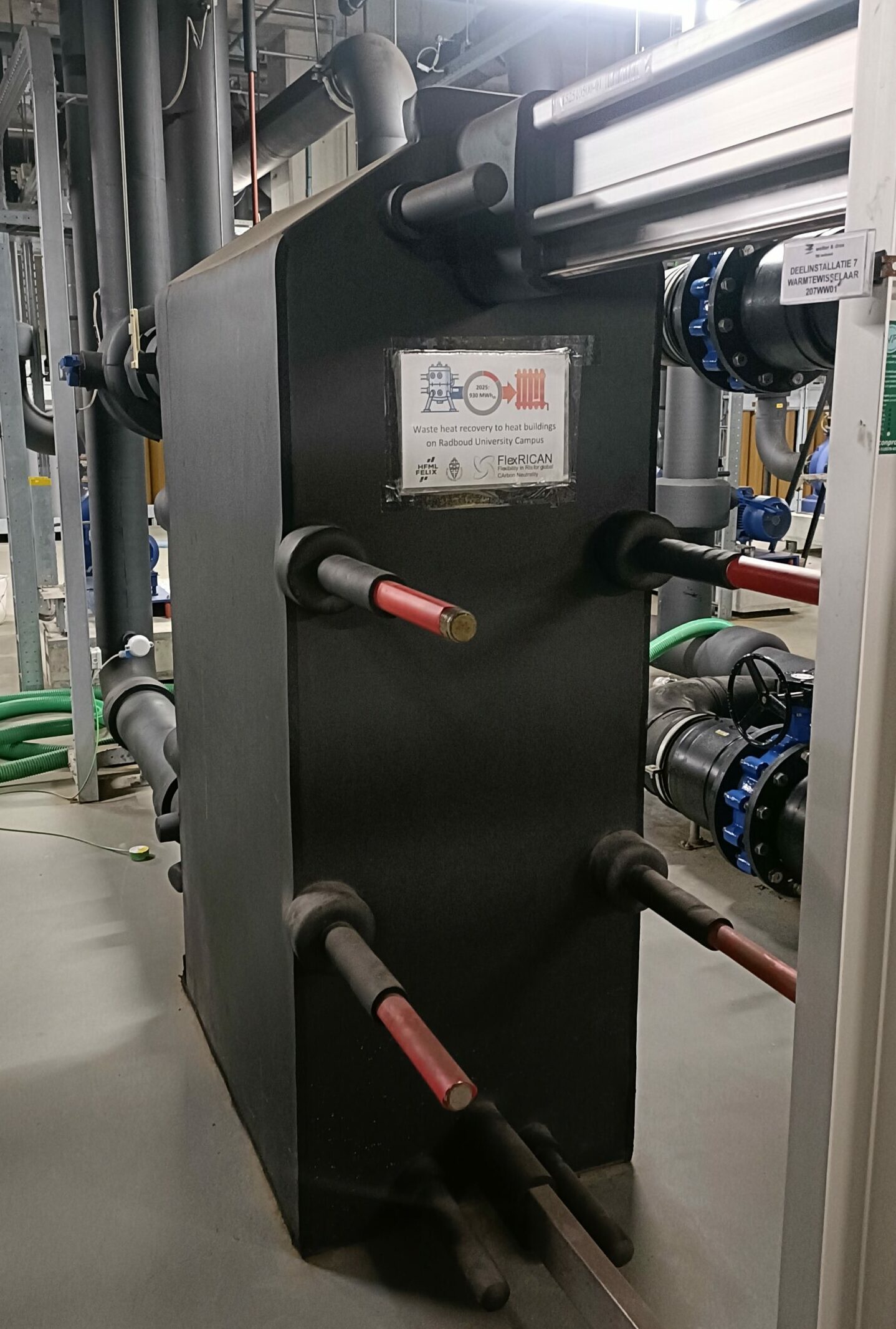
Heat exchanger connecting the HFML-FELIX cooling plant to the heating network of the Radboud University campus.
What it is

A report describing how low-temperature waste heat from research infrastructures can be used in the most efficient way.

What it does

The report examines how waste heat at around 17°C to 25°C can be recovered, upgraded, stored, or connected to local heating systems to improve overall energy efficiency.

Main topics
  • Feasibility of producing usable warm water from high-field facilities
  • Use of heat exchangers, heat pumps, and valves
  • Design proposals for waste heat recovery
  • Validation across different facilities within the FlexRICAN consortium
  • Value of thermal storage
  • Energy, water and CO2 savings
Why it matters

Waste heat is often available but underused. Recovering and reusing it can reduce energy waste, lower emissions on site and/or for external offtakers, and support local heating strategies.

Who can benefit
  • Research infrastructures
  • District heating stakeholders
  • Regional authorities
  • Energy service companies
  • Industrial sites with MW-scale waste heat streams
Format

Report with implementation-oriented design recommendations.

Why this is useful

It helps organisations identify practical pathways for turning intermittent low-temperature waste heat into useful energy services. If your site produces recoverable heat, use this report to assess whether it can support district heating, storage, or internal reuse.

Contact

The product owner for this tool is Femke Bangma, Sustainability Officer for Energy Transition at HFML-FELIX and WP5 Leader for the FlexRICAN project.

Contact Femke
FlexRICAN - Logo and disclaimer banner

Follow us on

Navigation

  • Home
  • About
  • Key results
    • Energy Chain and Battery Storage Planning
    • KER #2
    • Klystron Cooling Report
    • Waste Heat Report
    • Program Blocks for BMS
    • Cleanroom Optimisation Tool
    • Energy Optimisation Tool and Methodology
    • Flexibility Quality Label
    • Helium Report
  • News
  • Events
  • Home
  • About
  • Key results
    • Energy Chain and Battery Storage Planning
    • KER #2
    • Klystron Cooling Report
    • Waste Heat Report
    • Program Blocks for BMS
    • Cleanroom Optimisation Tool
    • Energy Optimisation Tool and Methodology
    • Flexibility Quality Label
    • Helium Report
  • News
  • Events
  • Work packages
  • Deliverables And Milestones
  • Consortium
  • Work packages
  • Deliverables And Milestones
  • Consortium
  • FlexRICAN
    • ABOUT
    • WORK PACKAGES
    • DELIVERABLES AND MILESTONES
    • Consortium
  • Results
    • PV Plant Prediction
    • Energy Chain and Battery Storage Planning
    • Klystron Cooling Report
    • Waste Heat Report
    • Program Blocks for BMS
    • Cleanroom Optimisation Tool
    • Energy Optimisation Tool and Methodology
    • Flexibility Quality Label
    • Helium Report
  • NEWS & EVENTS
    • EVENTS
    • NEWS
  • CONTACT