
Research Infrastructures (RIs) are facilities with energy-intensive consumption and often non‑average demand profiles. All of this is driven by the complex scientific equipment being used, their strict operational requirements, and, for many RIs, the need to run as many hours as possible to provide availability to their users for decades. Traditionally, these facilities rely almost exclusively on external electricity supply since reliability and power quality are imperative for optimal performance.
Over the past years, many homes, offices and production facilities started integrating renewable energy into their energy sources. The most intense growth has happened in the past 20+ years and a massive acceleration in solar and wind usage has been observed in the past 5+ years.
During the FlexRICAN 3rd Consortium Meeting in France, a visit to Institut National de l’Energie Solaire (INES) – French National Institution leading R&D, expertise and training for advanced solar technologies reaffirmed that the gap between intermittent generation and a seamless, resilient energy reality is gradually being bridged by technological innovation.
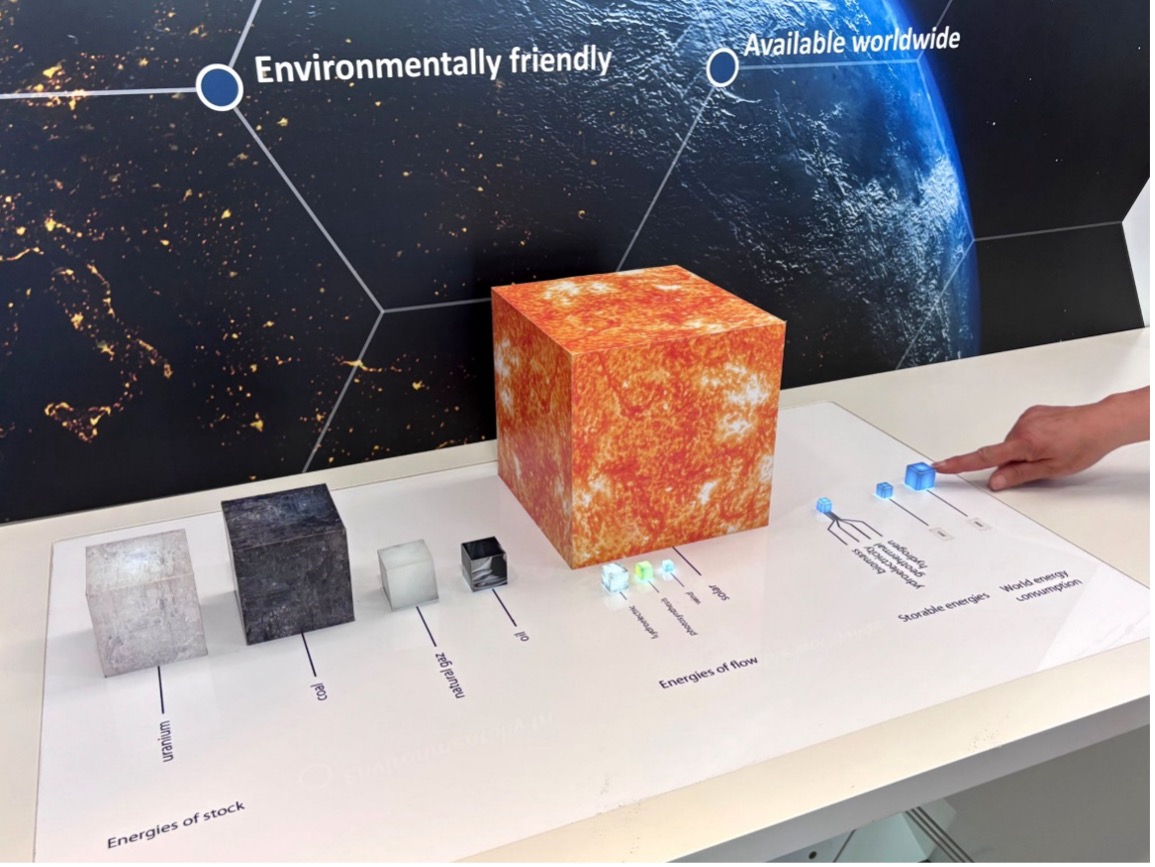
A model at INES for the comparison of different energy sources. In the photo, from left, 1-4 showcase the energies of stock (e.g. uranium, coal, oil), 5-8 showcase energies of flow (e.g. wind, solar (the big orange cube)), 9 showcases the storable energies (e.g. biomass, geothermal) and 10-11 showcase the world energy consumption.
The advancement of technology and the maturity of renewable energy technologies and their fast development, as well as current efforts to make Big Science more sustainable, are reshaping the way RIs can be designed and operated.
Renewable Energy Options and Challenges for RIs
Wind and solar energy represent particularly attractive options for Big Science facilities for multiple reasons. For the case of wind turbines, the amount of energy generated from one turbine is significantly higher when compared to other sources. Space for its integration on site can be a difficulty, but RI campuses normally have wide spaces of land available. This is also an advantage for a PV installation. Apart from RIs typically having significant surface areas suitable for PV deployment, including rooftops, parking spaces, and buffer zones, solar and wind energy installations also allow the possibility of not involving the electric grid when installed onsite. Moreover, solar PV is a modular and scalable technology, allowing installations to grow incrementally in line with operational needs and investment capacity. From a sustainability perspective, on‑site solar generation can significantly reduce the carbon footprint of research activities while increasing energy autonomy.
Despite these advantages, integrating solar energy into RIs is not without challenges. Solar generation, like many renewable sources, is inherently intermittent, and it will most likely not align with the energy demand of scientific instruments, which require stable and predictable power profiles. In addition, RIs often operate under strict constraints related to grid interaction and power quality. Simply installing solar panels is therefore insufficient; meaningful integration requires a system-level approach.
FlexRICAN and Renewable Energy Integration at RIs
One of the Work Packages of FlexRICAN, WP3, focuses on Renewable Energy Production at RIs. WP3 explores the technical feasibility and optimisation of site-integrated renewable energy systems, specifically solar, wind and biogas, to maximise power yield and grid resilience for RIs.
FlexRICAN aims to provide practical tools and results that guide RIs which intend to incorporate renewable energy sources into their facilities, adding value to their operations, users, and the environment. One of the solutions that FlexRICAN will provide is SunRISE – Solar for Research Infrastructures and Sustainable Energy. The main objective of this tool is to predict the energy output of a PV installation and provide a comprehensive overview of the most relevant characteristics (environmental, energetic, financial, etc.) to consider when installing solar PV at an RI.
The SunRISE tool is one of the 9 Key Exploitable Results (KERs) of the FlexRICAN project and in compliance with EU-funding rules, it will be an open-access solution like the other 8 KERs.
SunRISE
SunRISE models the performance of a PV installation for the specific geographical conditions of any given location. It will automatically fetch the corresponding topographical and meteorological data from the location the user provides and based on this information, it will calculate the energy production according to the specified type of solar panel and the size of the installation. SunRISE is currently under development and will be accessible via this link: github.com/EuropeanSpallationSource/FlexRICAN/tree/main/WP3_Renewables
What data is acquired, and from where?
Fetching data directly from available meteorological databases (such as PVGIS, NREL, SMHI, Open-Meteo, or equivalent). The information retrieved includes relative humidity, atmospheric pressure, cloud coverage, wind direction, ambient temperature, wind speed, global horizontal irradiance, direct normal irradiance, direct horizontal irradiance, direct radiation, solar azimuth and zenith angles, rain and snowfall. This information is used as the base for doing subsequent calculations and the modelling of performance.
What is the model output?
The model will calculate the performance of the defined PV installation under ideal conditions and compare it with more realistic conditions where factors such as cloud coverage and increased ambient temperatures are included in the model and taken into account. It will also make a comparison of both scenarios.
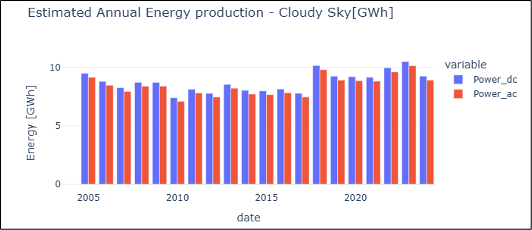
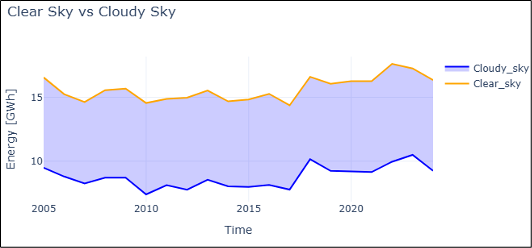
Screenshots from the SunRISE tool below demonstrate analysis projects the twenty-year energy yield for a solar installation in Southern Sweden, contrasting annual performance under both clear and cloudy sky conditions. It provides a realistic production baseline by accounting for regional weather variability over the system’s lifetime.
It will quantify financial estimates like return on investment (ROI), levelized cost of electricity (LCOE) and discounted payback period (DPP).
It will also calculate relevant environmental parameters like total CO2 emissions and the carbon payback time of the installation.
What’s the value of a tool like this?
SunRISE will provide a comprehensive analysis that will provide the user with a clear overview of some of the most relevant parameters to consider when designing a PV installation for an RI. The objective is to make a tool that is simple and easy to use, but that also provides results that are specific to the location and conditions provided by the user. This analysis will allow the user to be more informed to better evaluate the potential of a PV installation installed at their facility, thereby supporting the decision-making process on integrating renewable energy sources on-site.
FlexRICAN Case Study
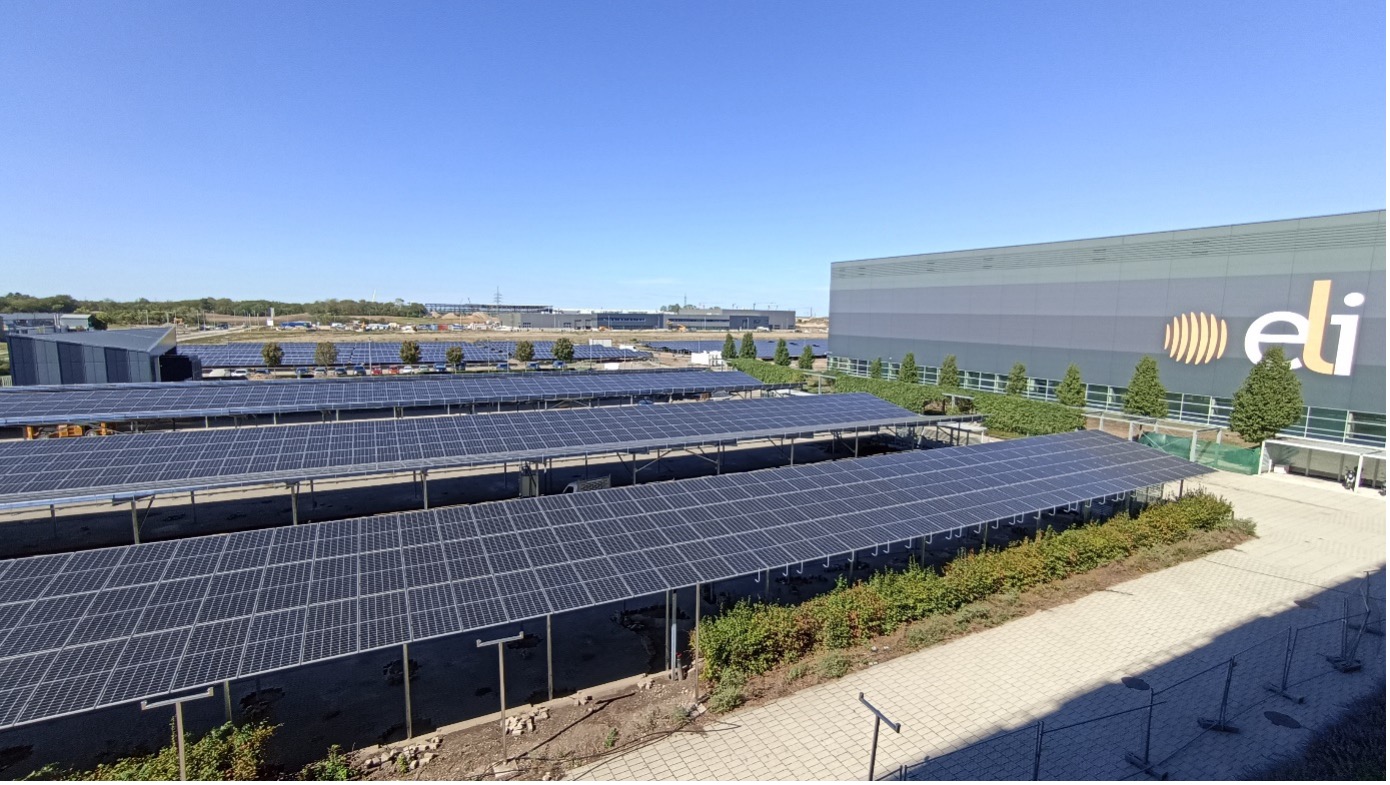
A solar PV installation of 5 MW has currently been deployed on the ELI-ALPS site, a member of the FlexRICAN consortium, in Hungary. This installation consists of 13 460 panels with a nominal power of 465 W each. The installation combines multiple PV configurations such as traditional ground-mounted panels, floating PV, and solar tracking devices. The installation is expected to produce 6.2 MW of electric power at peak, which represents approximately 40% of the total yearly energy consumption of ELI-ALPS. This significant contribution highlights the potential of on‑site solar generation to offset a substantial share of the energy demand of a Research Infrastructure, even under conservative operational assumptions. In the ELI-ALPS case, the installation of the panels is expected to produce 4 GWh/year. To compare, note that ELI-ALP’s last year’s consumption was 11GWh/year.
This installation will serve as a real‑world case study for the tools and methodologies being developed within the FlexRICAN project, as well as a practical benchmark demonstrating how to integrate renewable energy sources with flexibility considerations embedded since the design phase to maximise their benefits in an energetic, operational, and environmental way. By combining different PV technologies within a single installation, the site enables comparative analysis of performance, reliability, and integration challenges under identical environmental conditions. This will provide valuable insight for improving and upgrading tools (like SunRISE) to account for a wider range of conditions.
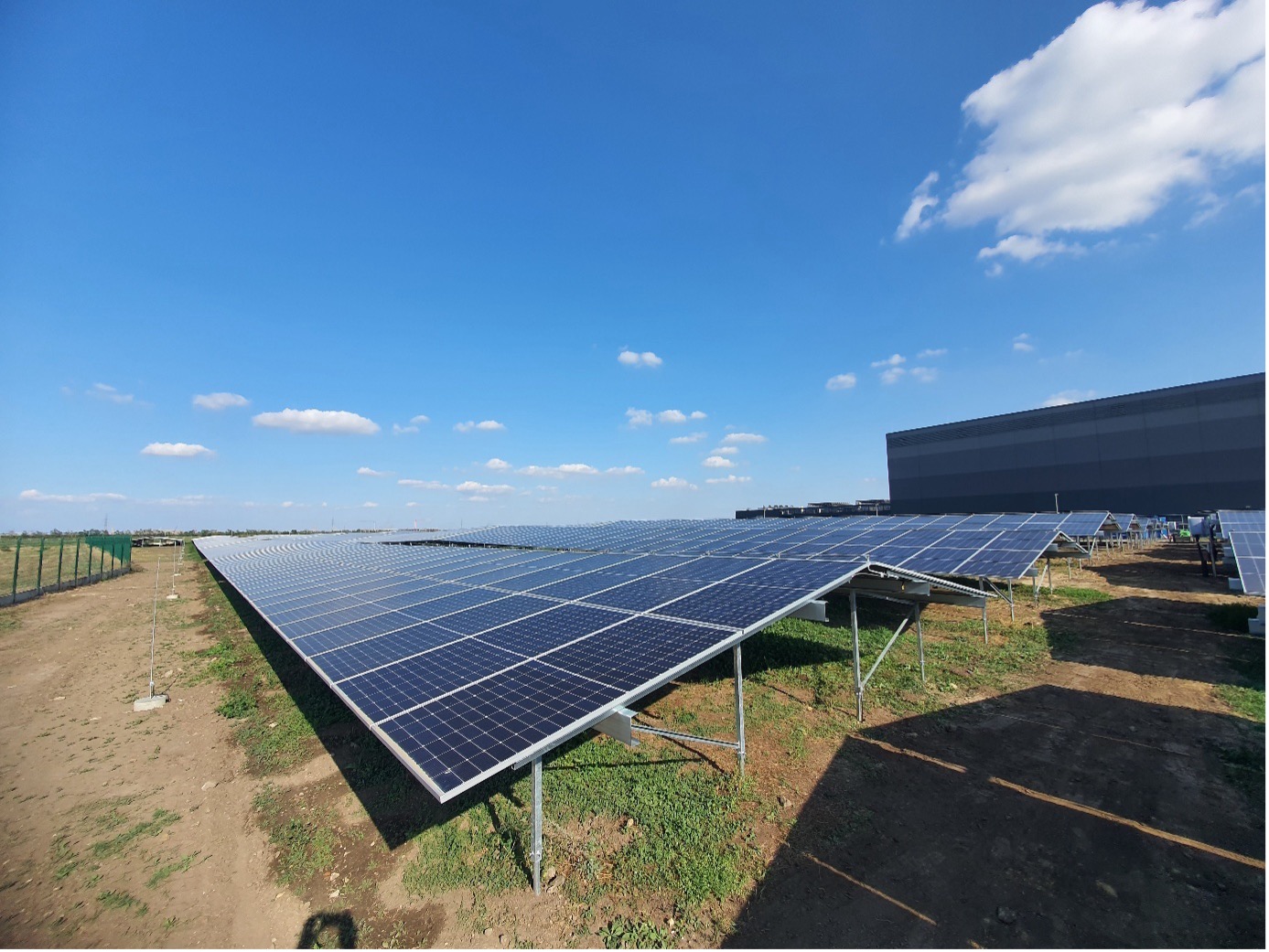
Beyond energy production, the installation represents a valuable test environment for assessing how renewable generation can be aligned with the operational constraints of a Big Science facility. Integrating this in a seamless way, without disrupting operations, as well as further insights gained from its operation, will support the development and validation of FlexRICAN tools, such as SunRISE, and help the definition of best practices for renewable energy integration across other Research Infrastructures.
As such, this installation goes beyond a standalone sustainability measure: it represents a replicable and scalable example of how RIs can act as innovation platforms for the energy transition, demonstrating the combined impact of renewable generation, flexibility, and intelligent energy management in a real operational context.
The study of this case is intended to be used to cross-check the results from SunRISE.
Summary
The integration of solar power into Big Science signifies a shift from mere consumption to operational resilience. Through the FlexRICAN project and the deployment of the 9 KERs, including the SunRISE tool, RIs can transform their traditional roles from passive energy users to active grid contributors. The ELI-ALPS case study described in this article serves as a definitive proof of concept, demonstrating that rigorous modelling can harmonise the rigid demands of high-precision physics with the inherent intermittency of renewable sources.
Ultimately, these efforts do more than mitigate carbon footprints; they reposition RIs as dual-purpose facilities of world-class discovery and frontrunners of the global energy transition.
Author
This article was written by Diego Herrera Ruiz, Renewable Energy Research Engineer at European Spallation Source ERIC. Diego is a WP Leader for Work Package 3: Renewable Energy Production at RIs. WP3 team members Zoltán Gyarmati, Péter Sütő, and Nana Kofi Twum-Duah contributed to the data and figures.
References for further reading